

The existing analytics were minimal, useful enough to confirm something was running but not useful enough to make decisions from. Clients had no real visibility into how their promotions were performing or how visitors were actually moving through their on-site experiences. The goal was to build something that changed that entirely.
I joined a two-person team as the designer and frontend developer. My collaborator handled the data layer. I owned everything the client would actually see and interact with, all nine pages of the platform, every chart, every visualization, built in React and HighCharts.
It was my first production React project. I was largely thrown into the deep end, which meant learning fast and building at the same time. The backend developer stepped in when I got stuck, but the frontend was mine to figure out.
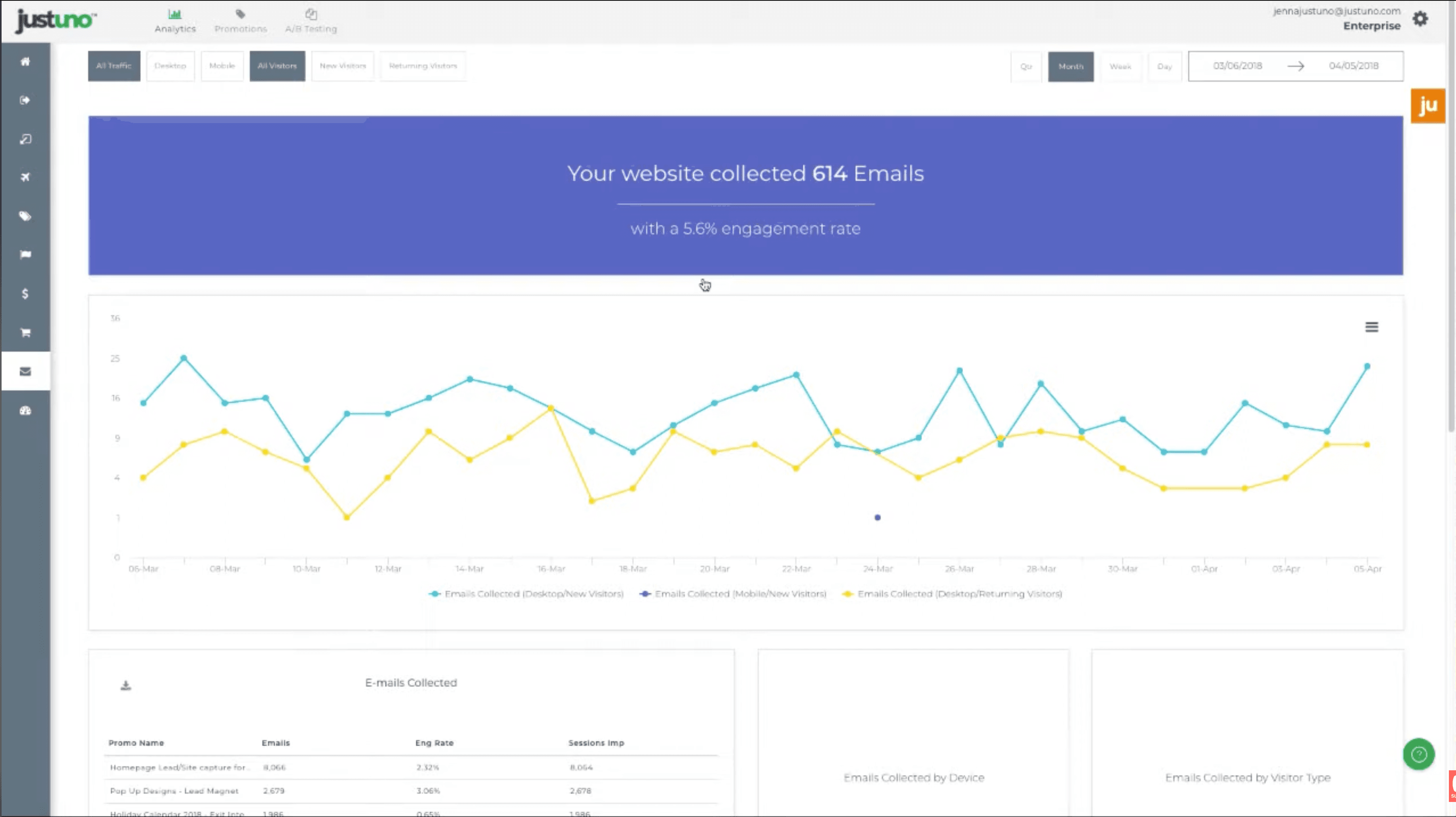

Nothing in Justuno's competitive landscape came close to this level of analytics at the time. That was a significant reason for clients to stay on the platform and a genuine differentiator in a crowded market.
The data the platform surfaced also fed directly into other parts of the product. Insights that were previously invisible became inputs for targeting, segmentation, and optimization tools elsewhere in the app. Building the analytics platform did more than give clients better reporting. It made the rest of the product smarter.